
How to run faster over 5 km and 10 km: pace, endurance and speed without going all out every day
Easy running, intervals, tempo work and strength training: understand each session’s role, explore examples with duration and recovery, and adapt a six-week framework to your capacity.
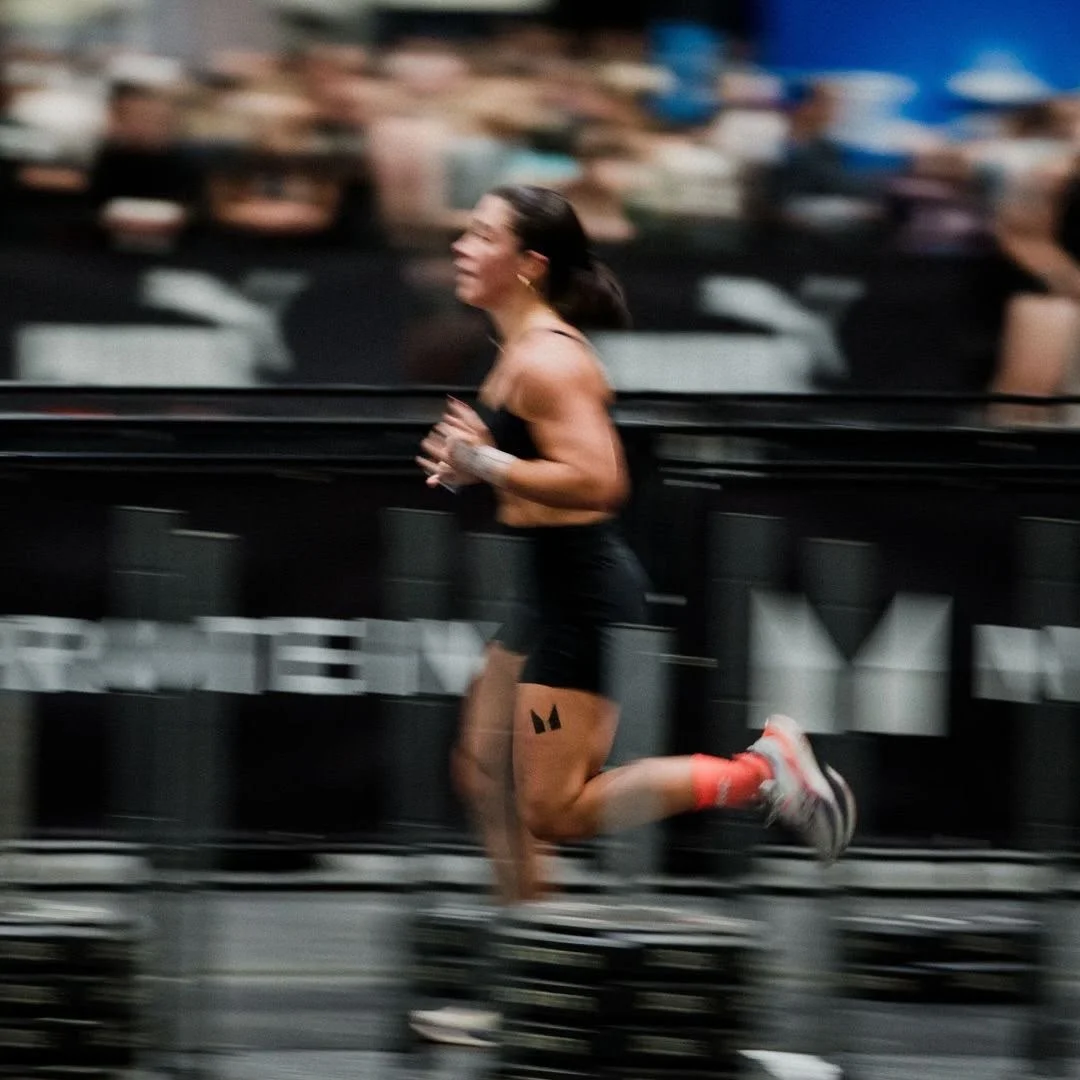
Two runners train four times weekly. One tries to beat their pace every session; the other separates easy running, specific work and recovery. We cannot predict who wins the next race, but the second structure makes the objectives clear. Constant fatigue does not prove quality. The aim is to build the capacities to perform when it matters without turning every workout into a race.
1. What determines your 5K and 10K performance?
Both distances depend heavily on aerobic metabolism. VO₂max is the maximal rate of oxygen consumption under particular conditions, but it does not explain everything. Running economy is the energy cost of a submaximal speed; sustainable speed also depends on intensity thresholds and preparation. Strength, coordination and pacing complete the picture. Runners with similar VO₂max can record different times.
Rosenblat’s meta-analysis of 13 studies and 348 endurance athletes found no universally superior intensity distribution for VO₂max and time trials. There were signals of different responses in recreational and competitive athletes. This does not make 80/20 a rule for every runner or establish one ideal method for every training phase.[1]
2. Easy running: slow down with purpose
Comfortable running builds endurance and allows work with less cardiovascular demand. One approximate reference is speaking in complete sentences with perceived effort around 3–4/10. Heat, hills and fatigue change the corresponding pace. Easy running still creates mechanical load: it is not permission for unlimited volume. Brief walking breaks can be part of the session.
| 35-min easy session | Duration |
|---|---|
| Progressive warm-up | 5 min |
| Comfortable running | 25 min |
| Easy cool-down | 5 min |

3. Intervals: run fast with recovery
Intervals alternate work and recovery without requiring a maximal sprint every repetition. Yang and colleagues analyzed 51 studies and 1,261 athletes: HIIT, sprint intervals and repeated sprints improved VO₂max versus conventional training, without significant differences among the three in the network analysis. Populations and protocols vary; the study neither identifies your perfect format nor proves continuous running useless.[2]
| Controlled intervals — 43 min | Prescription |
|---|---|
| Warm-up | 10 min easy |
| Work | 6 × 3 min fast and controlled; effort 7–8/10 |
| Recovery between repetitions | 5 × 2 min walking or jogging |
| Cool-down | 5 min easy |
That is 18 min fast, 10 min recovery, 10 min warm-up and 5 min to finish. An excessively fast first interval can compromise later ones; seek consistency instead of an opening record. Repetitions of 400 m are also possible, but the same distance takes different times for different runners. Intensity, duration, recovery and purpose define the stimulus.
4. Threshold and tempo: sustain a demanding effort
Ventilatory and lactate thresholds are not identical measures, nor do they automatically mean running for an hour. Tempo run is used in different ways for sustained effort. Without specific assessment, treat this as controlled tempo training rather than a threshold measurement. The goal is repeatable, demanding blocks without turning them into sprints.
| Tempo session — 43 min | Prescription | Approximate effort |
|---|---|---|
| Warm-up | 10 min | 2–3/10 |
| Sustained blocks | 3 × 8 min | 6–7/10 |
| Recovery between intervals | 2 × 2 min easy | 2–3/10 |
| Cool-down | 5 min | 2/10 |
5. Strength training to complement running
Llanos-Lagos and colleagues included 31 studies and 652 runners in their economy review. High loads, plyometrics and combinations showed benefits depending on speed and method, with relevant uncertainty. Another review included 38 studies and 894 runners, finding performance improvements with some strategies but no clear VO₂max changes. Strength work can help through neuromuscular pathways without guaranteeing a specific time saving.[3][4]
| Exercise | Sets | Repetitions | Rest |
|---|---|---|---|
| Squat | 3 | 5–6 | 2–3 min |
| Romanian deadlift | 3 | 6–8 | 2 min |
| Split squat | 2 | 8 per leg | 90 s |
| Standing calf raise | 3 | 10–12 | 60–90 s |
This is a complementary example for runners already tolerating resistance training, not an exhaustion circuit. Warm up and perform preparatory sets before the main work. Use load and range compatible with technique and leave repetitions in reserve. One or two weekly sessions may be considered; neither every possible exercise nor unprepared jumps are required.
6. The long run depends on history, not a magic distance
| Illustrative profile | Duration to consider according to tolerance |
|---|---|
| Beginner already running 20–30 min | 25–40 min |
| Intermediate focused on 5K | 40–65 min |
| Intermediate focused on 10K | 50–80 min |
| Advanced | According to volume, goal and history |
These ranges are neither mandatory targets nor permission to jump to the upper end. Those not yet running continuously can use run–walk intervals. An observational study followed 5,205 runners and 588,071 sessions: sessions over 10% longer than the longest distance in the previous 30 days were associated with higher overuse injury rates. It does not prove 9% safe or 11% injurious, or validate a fixed weekly 10% increase.[5]
7. What changes between 5K and 10K?
The 5 km allows relatively high effort for less time; the 10 km requires sustaining it longer. Aerobic base, economy, strength and strategy matter for both. A 5K plan may emphasize faster intervals; a 10K plan, sustained tempo and specific endurance. This does not require every 5K runner to do more intervals than every 10K athlete: individual limitations guide priorities.
8. A week with four runs
| Day | Illustrative session |
|---|---|
| Monday | Easy run: 30–40 min |
| Tuesday | Strength work adjusted to preserve next-day quality |
| Wednesday | Intervals or tempo according to priority |
| Thursday | Rest or light activity |
| Friday | Easy run: 30–40 min |
| Saturday | Light strength work or rest |
| Sunday | Comfortable long run adjusted to history |
This assumes four runs are already tolerated. If Tuesday’s strength work compromises Wednesday, reduce the load or reorganize the days rather than force everything in. One demanding session weekly may be a sufficient starting point. Two quality stimuli are an option for those recovering well, not a requirement. Available time is not the same as capacity to tolerate more training.
9. A six-week framework to adapt
This example is for runners tolerating at least three weekly runs and about 30 min of comfortable continuous running. The first 40-min long run only makes sense if a similar duration has recently been tolerated; otherwise shorten it and repeat phases. A fourth run is optional only when current volume is well tolerated. This is not a beginner or injury-return plan.
| Week | Specific session: work and recovery between repetitions | Easy runs | Comfortable long run |
|---|---|---|---|
| 1 | 5 × 2 min fast; 4 × 2 min easy recovery | 1–2 × 30 min | 40 min |
| 2 | 3 × 6 min sustained; 2 × 2 min easy recovery | 1–2 × 30 min | 40–45 min |
| 3 | 5 × 3 min fast; 4 × 2 min easy recovery | 1–2 × 30–35 min | 45–50 min |
| 4 | 2 × 8 min sustained; 1 × 3 min easy recovery | 1–2 × 25–35 min | 40–45 min |
| 5 | 4 × 4 min fast; 3 × 2–3 min easy recovery | 1–2 × 30–40 min | 45–55 min |
| 6 | Short controlled stimulus; 5K or 10K assessment only if ready | Easy and reduced | Replaced by the assessment if appropriate |
Add warm-up and cool-down to each specific session; the table shows only central blocks. Fast repetitions use approximate effort 7–8/10, sustained work 6–7/10, while easy and long runs stay comfortable. Do not add the other complete examples on top of this plan. Week four illustrates reduced demand rather than a mandatory deload. Six weeks guarantee neither improvement nor readiness to complete 10 km.
10. Choose pace without relying on a laboratory
Running 5 km in 25 min means averaging 5:00 min/km in that test, not a compulsory pace for every session. Combine perceived effort, conversation, recent tests and historical trends. Heart rate adds context, but watches and sensors have limitations; heat, stress and fatigue change responses. Preserve planned effort even when it requires slowing down.
11. Race strategy: control the start

For 5K, start at an effort compatible with capacity, hold the pace and assess a late increase. For 10K, the longer duration demands extra care not to overspend in the first kilometers. A negative split means completing the second half faster, but it is not mandatory. Course, weather, experience and goals change decisions; an exceptional opening kilometer may cost you later.
12. Seven common mistakes
- Turning every run into a hard session.
- Increasing distance and intensity at the same time.
- Going all out on the first interval and compromising the rest.
- Ignoring complementary strength work because only running seems to matter.
- Using pace alone without considering heat, terrain and fatigue.
- Copying professional volume without the same history and recovery.
- Treating missed sessions as a mileage debt to repay.
13. When to progress and when to reduce
Track duration, distance per session, pace under similar conditions, effort, heart rate when available, interval consistency and recovery. Comfortable easy runs and repeatable blocks may allow one variable to progress. Persistent decline, progressive pain or poor recovery call for reassessment. One bad hot-weather session does not prove regression; an excellent one does not require making the entire program harder.
14. Beginners, intermediate runners, advanced runners and returning
Beginners can combine running and walking in two or three sessions according to tolerance, without early maximal intervals. Intermediate runners can add tempo, intervals and strength; advanced runners may need specific assessments and different distribution, but still experience fatigue. After weeks off, do not assume your old distance remains tolerable. Cardiovascular capacity and musculoskeletal tolerance can return at different rates.
15. The role of VETOR
Completing a first 5 km and improving a 10 km time require different decisions. VETOR’s approach connects goals, current capacity, history, routine and progression while considering running–strength interactions. With only 30 min instead of 60 min, adaptation should preserve an achievable purpose instead of automatically replacing every run with an intense circuit. Cycling and rowing can complement training but are not complete running equivalents.
Tracking duration, distance, pace and effort depends on available data. It does not equal directly measuring running economy, determining laboratory thresholds or precisely predicting race times without implemented, validated methods. Value lies in organizing suitable stimuli and supporting decisions, not producing ever harder sessions.
16. What science still cannot guarantee
There is no universally best intensity distribution, HIIT format or progression. Reviews include diverse populations and protocols, and subgroup analyses require caution. Strength benefits vary by method and speed; distance–injury associations do not establish causality. Use evidence to select stimuli and individual trends to adjust dose. Better running depends on accumulating sustainable preparation, not winning every workout.
Prepare your next run with VETOR
Join the waitlist for VETOR updates and an approach to training guided by goals, context and progression.
References
- Rosenblat et al. · Which Training Intensity Distribution Intervention Will Produce the Greatest Improvements in Maximal Oxygen Uptake and Time-Trial Performance in Endurance Athletes? A Systematic Review and Network Meta-analysis of Individual Participant Data.Sports Medicine · 55:655–673 (2025) · 10.1007/s40279-024-02149-3
- Yang, Wang & Guan · Comparison of Different Interval Training Methods on Athletes’ Oxygen Uptake: A Systematic Review with Pairwise and Network Meta-analysis.BMC Sports Science, Medicine and Rehabilitation · 17:156 (2025) · 10.1186/s13102-025-01191-6
- Llanos-Lagos et al. · Effect of Strength Training Programs in Middle- and Long-Distance Runners’ Economy at Different Running Speeds: A Systematic Review with Meta-analysis.Sports Medicine · 54:895–932 (2024) · 10.1007/s40279-023-01978-y
- Llanos-Lagos et al. · The Effect of Strength Training Methods on Middle-Distance and Long-Distance Runners’ Athletic Performance: A Systematic Review with Meta-analysis.Sports Medicine · 54:1801–1833 (2024) · 10.1007/s40279-024-02018-z
- Frandsen et al. · How Much Running Is Too Much? Identifying High-Risk Running Sessions in a 5200-Person Cohort Study.British Journal of Sports Medicine · 59(17):1203–1210 (2025) · 10.1136/bjsports-2024-109380
Educational content for healthy adults; not a substitute for medical assessment or individual prescription. Effort, volume, recovery and progression examples must fit training history. No guarantee of outcomes or injury prevention. Illustrative photographs do not identify race distance or imply endorsement of VETOR.