
High-performance hiking and rucking: endurance, strength and preparation for loaded trails
How to walk farther, climb efficiently and carry the load you need: practical sessions, a six-week progression and safety for a better journey.
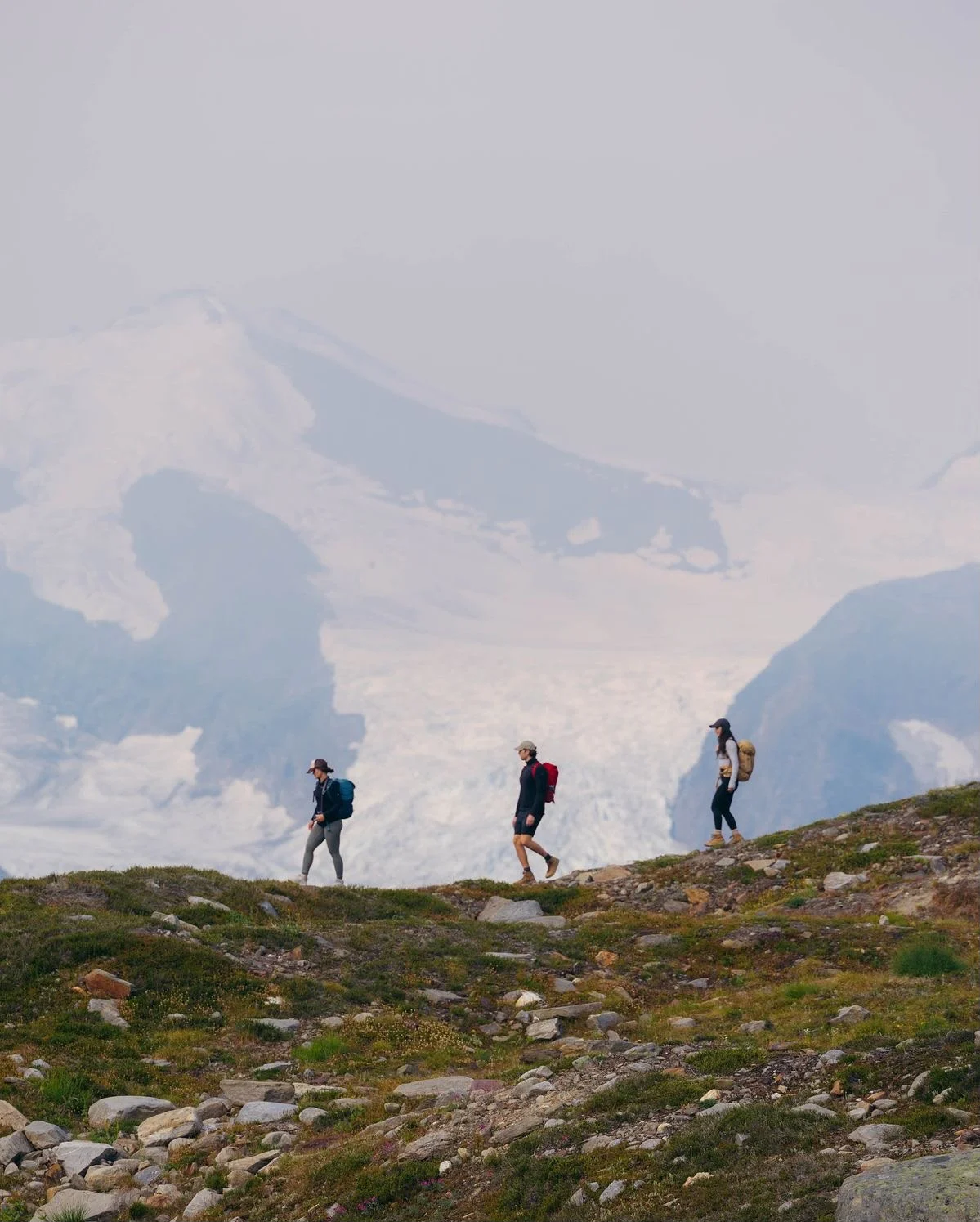
Imagine a 20 km trail with 900 m of cumulative ascent. One person prepares only by adding distance and weight; another combines walking, strength training, inclines and gradual backpack exposure. We cannot predict who will finish stronger, but the second approach addresses more of the task’s demands. Preparation should develop capacities, not merely reproduce difficulty.
1. Hiking, trekking and rucking: what changes?
| Activity | Characteristic |
|---|---|
| Hiking | Walking on trails and in natural environments |
| Trekking | Long routes, often lasting several days |
| Rucking | Walking while carrying a load, usually in a backpack |
Definitions vary by region. Across these activities, distance alone says little: speed, terrain, gradient, duration and load change the cost of movement. Five flat kilometres without a pack are not equivalent to the same distance on a mountain carrying equipment.
2. The capacities behind the journey
Aerobic capacity sustains prolonged effort; strength helps move body and equipment; muscular endurance supports thousands of steps. Balance, movement efficiency and backpack tolerance complete the picture. A 2025 review groups load carriage influences into personal, equipment and environmental factors. No single exercise or metric explains everything.[2]
3. More weight does not mean better training
A 12 kg backpack equals 20% of body mass for a 60 kg person and about 13.3% for a 90 kg person. This calculation provides context but does not determine readiness: strength, experience and duration also matter. There is no ideal or safe percentage for everyone. First build comfortable unloaded walking; add a pack when it serves a specific purpose and is well tolerated.
4. Backpack, slope and spine: what the study measured
Sturdy and colleagues used musculoskeletal modelling to estimate lumbar forces during level, uphill and downhill walking, including backpacks at 40% of body mass. Slope and load changed the estimates; a hip belt reduced certain accumulated compression measures downhill. The study did not directly test injury prevention. The 40% load was an experimental condition, not a recreational recommendation.[3]
5. Aerobic base: a 45-minute walk
Preparing for a four-hour hike does not require every session to last four hours. Shorter walks, cycling or comfortable running can develop fitness without reproducing every terrain demand. For someone already comfortable with continuous exercise, the example below prioritizes unloaded endurance. RPE is perceived exertion, from 0 at rest to 10 at maximum.
| Step | Time | Intensity |
|---|---|---|
| Warm-up | 10 min | Easy |
| Continuous walk | 30 min | RPE 3–4/10; comfortable conversation |
| Cool-down | 5 min | Easy |
Shorten the session if you do not yet tolerate this volume. Conversation is a practical guide, not an exact physiological threshold measurement. A backpack is not needed every session: use external load to train a specific need.
6. Uphill: prepare for elevation gain
Two 10 km trails can differ completely if one gains 50 m and the other 1,000 m. Cumulative ascent adds all uphill sections, not just the difference between start and finish. A loop returning to its start can still include substantial climbing. For intermediate participants, a treadmill can provide controlled uphill intervals.
| Step | Prescription |
|---|---|
| Warm-up | 10 min easy |
| Uphill intervals | 4 × 4 min; controlled moderate-to-hard effort |
| Recovery | 3 × 3 min easy between climbs, at lower incline |
| Cool-down | 5 min easy |
Total: 40 minutes. Adjust speed and incline for controlled walking; there is no requirement to use 10%, 12% or 15%. If you constantly rely on the rails to sustain the difficulty, reduce the effort. Progress duration, speed or incline separately according to your response.
7. Descents also need preparation
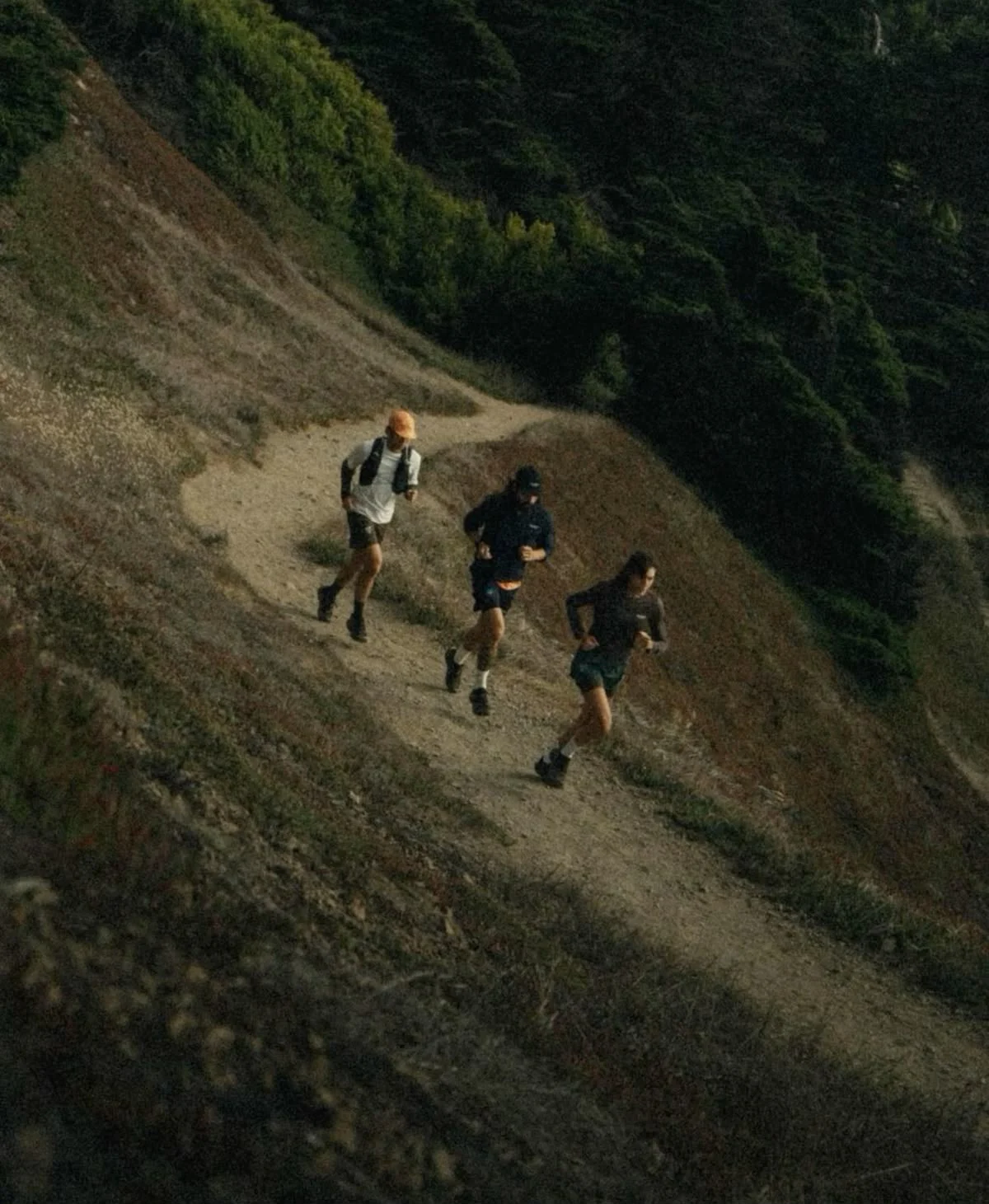
During descent, muscles produce force while lengthening to control the loss of height: this is eccentric work. Good cardiovascular fitness does not guarantee legs ready for a long descent. Squats, lunges and step-downs can develop control but do not replace gradual terrain and balance practice.
8. Strength for walking and carrying loads
A review by Mikkonen and colleagues highlights benefits of strength training, alone or with aerobic work, for loaded military tasks. Recreational application requires adapting goals, experience and equipment. The session below is an intermediate example; warm up with easy movement and preparation sets, choose manageable loads and leave repetitions in reserve.[1]
| Exercise | Sets × repetitions | Rest |
|---|---|---|
| Squat | 3 × 5–6 | 2–3 min |
| Romanian deadlift | 3 × 6–8 | 2 min |
| Step-up | 3 × 8 per leg | 90 s |
| Standing calf raise | 3 × 10–12 | 60–90 s |
| Row | 3 × 8–10 | 90 s |
Allow approximately 45–60 minutes, including warm-up and transitions. You do not have to use every exercise. Strength training and loaded walking are complementary: the first allows targeted muscle work and controlled rest; the second combines endurance with equipment-specific tolerance.
9. Learn from military research without copying marches
Transferable principles include strength, conditioning, specific exposure and individual progression. Occupational marches may involve heavy loads, long distances and sleep deprivation. None of this needs to become a reference for recreational hiking. Preparation should match the actual challenge, not the most extreme routine available.
10. Rucking: getting used to a light load
| Step | Duration | Guidance |
|---|---|---|
| Unloaded warm-up | 5 min | Easy |
| Backpack walk | 30 min | Light load and comfortable pace |
| Unloaded cool-down | 10 min | Easy |
Total: 45 minutes for someone already comfortable walking. Three kilograms for a 70 kg person equals about 4.3% of body mass: a mathematical example, not a validated prescription. When adding a pack, maintain or reduce your usual duration. Track foot, shoulder and back comfort, pace stability and next-day response. If thirty unloaded minutes are still difficult, build that base first.
11. A six-week progression
This model assumes a healthy adult who can already walk comfortably for about forty minutes. Do not add everything to your current program: choose sessions according to availability and recovery. The calendar organizes observation but does not require progression.
| Week | Priority |
|---|---|
| 1 | Establish a baseline with comfortable walks |
| 2 | Consolidate tolerance; maintain any light load used |
| 3 | Increase one session’s duration if recovery allows |
| 4 | Consolidate or reduce demand according to response |
| 5 | Introduce more specific slopes or terrain without increasing everything |
| 6 | Repeat a comparable route and review the next cycle |
There is no evidence supporting a 10% increase rule as universally safe for rucking. Choose the variable addressing your limitation: duration for sustained effort, incline for climbing or load for equipment carriage. Keep the others relatively stable and observe the response before increasing again.
12. Prepare for a long hike without repeating it every week
General fitness helps, but cycling for two hours does not guarantee tolerating four hours of uneven walking with a pack. Combine general preparation with gradual exposure to real conditions. The week below illustrates five intermediate sessions, not a mandatory frequency. Friday strength should be moderate if it compromises Saturday’s hike, or moved to another day.
| Day | Session |
|---|---|
| Monday | Strength training: general strength |
| Tuesday | Comfortable aerobic walk |
| Wednesday | Recovery |
| Thursday | Incline walking |
| Friday | Supplementary strength adjusted to the next hike |
| Saturday | Progressive hiking on appropriate terrain |
| Sunday | Rest |
13. Backpacks and injuries: association is not destiny
A prospective study followed 1,206 participants at Philmont Scout Ranch; 7% reported injuries. In adjusted analysis, higher backpack-to-body-mass ratio, previous injury and BMI above 30 were associated with injury. Participants were predominantly young and male, and injuries were self-reported. This establishes neither causation nor a universally safe load. Consider your history and reduce demand with persistent pain or altered gait.[4]
Severe pain, inability to bear weight, numbness or unexpected weakness require stopping and seeking assessment. A light backpack does not eliminate all risk; equipment and fitness do not replace judgement.
14. Fit the backpack to your body and task
Keep heavy objects stable and close to the torso according to the pack’s design. Adjust straps without excessive compression and use a hip belt when the structure supports it. Torso length and body proportions matter, not just height. Test equipment before the hike. Good fit improves comfort but does not make excessive load safe.
15. No nearby mountains: useful alternatives
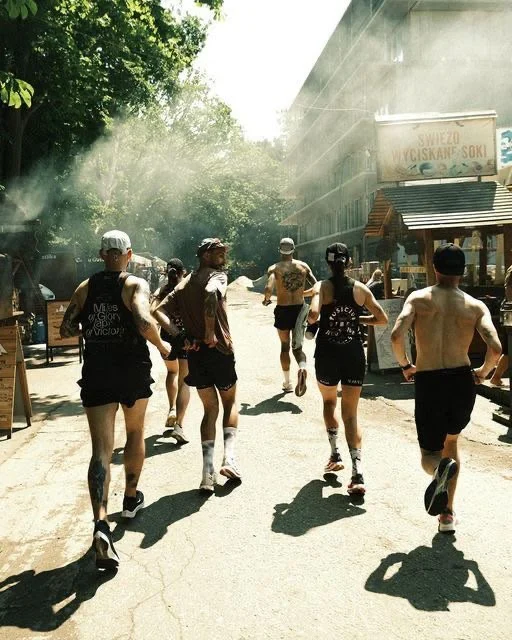
Incline treadmills and stairs can build climbing capacity; resistance training develops strength; flat walking and cycling support aerobic fitness. They do not fully replace a trail: natural terrain requires step adjustment, balance and descents. When weather prevents going out, preserve the session’s goal in a safe environment and return to specific exposure when possible. Running photos illustrate general conditioning, not loaded walking.
16. Energy and hydration on the route
An easy thirty-minute walk needs different planning from a long trek. During prolonged demanding exercise, 30–60 g of carbohydrate per hour is a sports-nutrition reference, not an automatic target for every hike. Adjust to effort, duration and gastrointestinal tolerance, testing foods before the main event. Usual nutrition and sufficient protein support recovery.[7]
Plan water around weather, duration, safe sources and individual losses. There is no universal litres-per-hour rule; overdrinking is also risky. Sodium replacement may matter during prolonged heavy sweating but does not make excessive water intake safe. Carry enough water and an appropriate treatment method when relying on natural sources.[5]
17. Weather and safety are part of performance
Heat increases demand; cold, wind and rain can make activity dangerous. The CDC recommends shade, breaks and cooler hours on hot days. Storms, ice, poor visibility, swollen rivers or strong winds can justify changing the route or cancelling. Fitness does not neutralize the environment.[6]
Confusion, collapse or marked deterioration in heat are emergency signs: stop exertion, seek cooling and call for help. In the mountains, keep the group together at a pace accommodating those needing more time. NPS planning guidance emphasizes a suitable route, communication and essential equipment.[5][6]
18. Track progress in context
Record distance, duration, cumulative ascent, load, perceived effort, weather and recovery. Heart rate and speed help but do not tell the whole story. Covering the same distance more slowly with more weight or difficult terrain does not demonstrate lost fitness. Compare a familiar route in similar conditions, observing work achieved at equivalent effort.
19. Five preparation mistakes
- Adding weight whenever walking feels easy.
- Training only with a pack and ignoring strength or aerobic fitness.
- Preparing climbs while neglecting descent tolerance.
- Judging difficulty by kilometres alone.
- Copying military marches without considering your experience.
20. Where VETOR fits into preparation
Someone comfortable with fifteen flat kilometres but struggling uphill needs something different from a strong person who fades after an hour. VETOR aims to connect goals, activities, history, progression and tracking. Training should account for daily life, strength work and total weekly effort. Available data supports decisions and conversations with professionals.
This does not mean the app already interprets maps, calculates trail difficulty, detects pack weight or automatically estimates elevation and energy expenditure. Those functions would require specific implementation and validation. Personalization starts with using real information well, not promising measurements that do not exist.
21. What science cannot yet establish
Much research comes from military settings with participants and tasks different from recreation. Protocols vary in speed, slope and load. There is no universally superior combination or injury-proof weight. This guide’s examples are educational applications, not protocols proven ideal. Individual response and real conditions should guide adjustments.
VETOR — DON’T GUESS.
Your next hike starts with preparation. Join the waitlist and follow VETOR.
References
- Strength and performance in military tasksMikkonen et al. (2025) · BMJ Military Health · 171(5):413–417
- Factors affecting load carriageGraham et al. (2025) · BMJ Military Health · 171(5):458–462
- Slope, heavy backpacks and estimated lumbar forcesSturdy et al. (2025) · Journal of Biomechanical Engineering · 147(1):011004
- Factors associated with backpacking injuriesStoltzfus et al. (2022) · Wilderness & Environmental Medicine · 33(1):59–65
- Hiking safety: planning and equipmentNational Park Service (2025) · Great Smoky Mountains
- Heat and health: official guidanceCDC (2026) · National Center for Environmental Health
- Nutrient timing and prolonged exerciseKerksick et al. (2017) · Journal of the International Society of Sports Nutrition
Educational content for adults. Examples do not replace individual assessment and prescription, professional guidance or activity safety planning.