Mobility and joint stability training for injury prevention
Active mobility, joint stability and specific warm-ups can support injury prevention without promising immunity from injury.
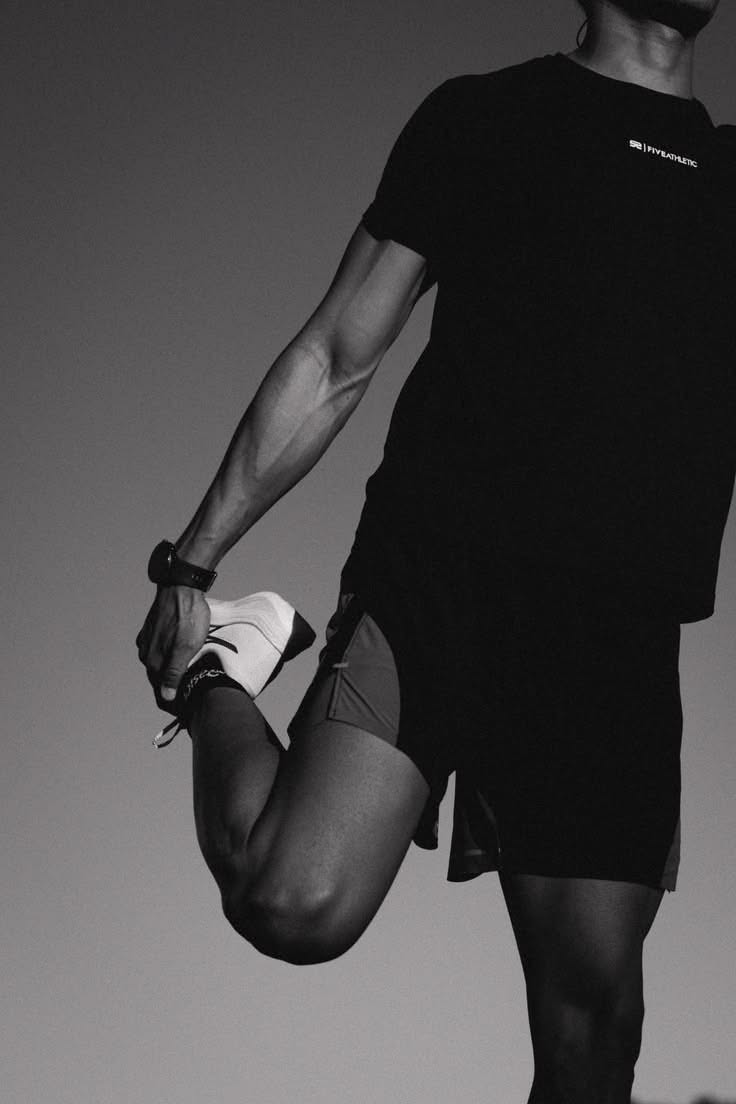
A strong athlete, but without range of motion control, is not necessarily a prepared athlete. He can lift a lot of load, run many kilometers or swim large volumes, but if the body only works well within small, predictable and protected ranges, any demand outside this standard becomes compensation. In Jiu-Jitsu, this appears when the hips don't rotate and the lower back pays the bill. When running, it appears when the ankle does not absorb contact with the ground well and the shin, foot or knee begins to complain. In swimming, it appears when the shoulder needs to repeat thousands of strokes without scapular stability, thoracic control and adequate strength in the rotator cuff. The problem is not just “lack of stretching”; it is a lack of mobility, stability and coordination within the range that the sport requires.
Flexibility and mobility are not the same thing. Flexibility is the passive ability of a tissue or joint to reach a certain range, often with external assistance, gravity or relaxation. Mobility is the active ability to access, control and produce force within this range. An athlete may be able to passively rest their head on their knee and still be unable to stabilize their hips in a stride, defend a takedown, exit a guard position, or maintain alignment in a one-legged squat. Therefore, in the VETOR method, mobility is not treated as a “nice stretch” before training. It is seen as joint control: useful range, with strength, breathing, stability and transfer to real movement. Reviews show that both stretching and strength training can improve range of motion, which reinforces the idea that mobility doesn't just depend on sitting still in passive positions. (PMC)
The modern warm-up needs to prepare the athlete to move, not just “warm up”. Dynamic warm-ups have gained ground because they combine an increase in body temperature, neuromuscular activation, specific mobility and technical testing of the pattern that will be trained. Recent reviews point out that dynamic warm-ups can improve performance readiness, range of motion and potentially contribute to injury reduction when they are part of a multifactorial strategy, although they should not be sold as absolute protection. (PMC) For VETOR, this means that the 10-minute pre-workout routine should not be random. It needs to open the most demanding joints, activate the muscles that protect those joints and connect everything to the pattern of the day: running, swimming, fighting, squatting, pulling, pushing or turning.
For combat athletes, the hip is a priority. In Jiu-Jitsu, Wrestling and MMA, the fight takes place in positions where the hips need to flex, extend, abduct, adduct, internally rotate, externally rotate and generate force at strange angles. A locked hip pushes movement to the lower back, knee and groin. The pre-workout routine can start with 90/90 transitions, assisted hip airplanes, lunges with rotation, controlled cossack squats and glute bridges with marching. The goal is not to tire your leg; is waking rotation, pelvic control and stability. For a fighter, hip mobility is not a physical therapy luxury. It's efficiency for guarding, passing, takedowns, sprawls, kicks, sweeps, single leg defense and the ability to produce force without relying on lumbar compensation.
Useful mobility is not decorative stretching
The objective is to control range of motion in the real demands of the sport.
For runners, the ankle and foot are critical points. With each stride, the body needs to absorb impact, control pronation, transfer force and push off the ground. When ankle dorsiflexion is limited, the body may compensate by overrotating the foot, dropping the arch, shifting the knee, or increasing stress on the shin. Medial tibial stress syndrome, popularly known as shin splints, is multifactorial: it involves training load, previous history, biomechanics, strength, body composition, surface, footwear and volume progression. Reviews show that it represents a relevant portion of injuries in runners and that the risk factors are not yet completely closed, so it would be wrong to say that “ankle mobility cures shin splints”. It is correct to say that the ankle, foot, calf and load control are part of the preventive shield. (PMC)
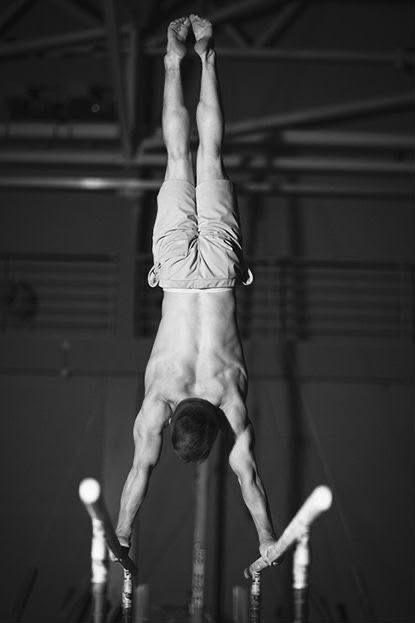
The thoracic spine is another point that many people ignore. It needs to rotate, extend and allow the shoulder, rib cage and scapula to work better. When the thoracic region is rigid, the shoulder may lose space, the lower back may compensate for rotation and breathing may become more limited during exertion. For swimmers, this is even more important because the shoulder is subjected to very high repetitive volume. Reviews on “swimmer’s shoulder” highlight that shoulder pain in swimmers can be related to training errors, deficits in strength, mobility, scapular control and repetitive overload, and that screening and correction of deficits can help with prevention. (PMC) A VETOR routine for swimmers must include thoracic mobility, scapular control, shoulder external rotation, serratus anterior and rotator cuff, because a healthy shoulder does not just depend on the shoulder: it depends on how the scapula, thoracic spine and trunk organize the stroke.
A 10-minute pre-workout routine needs to be simple, repeatable, and specific. For hips: 90/90 active for 60 seconds, lunge with rotation for 60 seconds and controlled cossack squat for 60 seconds. For ankle: dynamic knee-to-wall for 60 seconds, slow calf raise for 60 seconds and tibialis raise for 60 seconds. For thoracic spine and shoulder: cat-cow with breathing, thoracic rotation on four supports, wall slides, scapular push-up and external rotation with elastic, using 30 to 60 seconds per exercise. The athlete does not need to turn the warm-up into a full workout. The goal is to emerge from the rut moving better than you entered it, without unnecessary fatigue. If mobility takes energy away from the main training, the dose is wrong.
VETOR does not treat mobility as a magical promise against injuries. Injuries are not born from a single factor. They appear when load, recovery, technique, sleep, strength, tissue, previous history, stress and decision making combine in an unfavorable way. But mobility and joint stability increase the safety margin: the athlete gains more movement options, distributes better force, reduces gross compensations and improves technical efficiency. For the runner, this can mean a more economical stride and less accumulated stress. For the swimmer, a cleaner stroke and a shoulder more prepared for volume. For the fighter, freer hips, a more organized spine and joints better able to survive chaos. The goal is not to be flexible for aesthetics. It's about having useful, active and strong range to perform better, for longer.
Reliable sources and what they support
1. Strength Training versus Stretching for Improving Range of Motion — Systematic Review and Meta-analysis, 2021 This review compared strength training and stretching to improve range of motion. The most useful point for VETOR is that ROM does not rely solely on passive stretching; Well-applied force can also improve range. This supports the difference between “being flexible” and “controlling mobility with force”.
2. Dynamic Warm-ups Play Pivotal Role in Athletic Performance and Injury Prevention — 2024/2025 This review explains why dynamic warm-ups are preferred in many sporting contexts: they increase readiness, activate the neuromuscular system, improve range of motion and can contribute to injury reduction within a broader strategy. Good source to justify 10 minute pre-workout routine with active mobility, activation and specific patterns.
3. Potential Effects of Dynamic Stretching on Injury Incidence of Athletes — 2023 This review discusses the role of dynamic stretching in warming up and its possible effects on injury incidence. It helps support the case that pre-workout mobility should be dynamic and specific, but it also requires honesty: it is not an absolute guarantee against injury.
4. Flexibility and its Effects on Sports Injury and Performance — Gleim & McHugh, 1997 It is a classic review on flexibility, performance and injury. It shows that the relationship between flexibility and performance is dependent on the sport, that is, more flexibility does not always mean better performance. This supports a central idea of VETOR: the athlete does not need to seek generic maximum range of motion; needs the useful range of motion for the modality.
5. Risk Factors Associated with Medial Tibial Stress Syndrome in Runners — Systematic Review, 2013 This review analyzed risk factors associated with medial tibial stress syndrome in runners. She reinforces that shin splints is multifactorial and that understanding the risk factors is still incomplete. This prevents a false promise like “ankle mobility alone prevents shin splints”. The correct thing to do is to include ankle, foot, calf, load progression and volume control as part of the preventive shield.
6. Medial Tibial Stress Syndrome: A Review Article — 2022 This review explains that exercise-related shin pain is common in runners and represents a relevant portion of overuse injuries in the lower limbs. Good source to contextualize why runners need to take care of their ankle, calf, anterior tibialis, foot and load progression.
7. Prevention and Treatment of Swimmer’s Shoulder — 2006 This source is very useful for swimming. She explains that swimmer's shoulder can be prevented with pre-season screening, identifying deficits, correcting training errors and paying attention to factors such as strength, mobility and control. Supports the part of the article about healthy shoulder depending on scapula, cuff, thoracic spine and load control.
8. Impact of Physiotherapy on Shoulder Kinematics in Swimmers — 2024 This study reinforces that fatigue can affect strength, proprioception, range of motion and shoulder kinematics in swimmers, increasing the risk of overuse injuries. It's a good modern source for why mobility and stability should be trained before pain appears, not just after.
9. A Systematic Review of Upper Body Warm-up Strategies — British Journal of Sports Medicine, 2015 This review analyzed upper body warm-up and its effects on performance and prevention. It serves to support the part of the article about swimmers and athletes who rely heavily on the shoulder: warming up the trunk, scapula and cuff needs to be planned, not improvised.
At VETOR, mobility is not decorative stretching before training. Flexibility is passive range of motion; mobility is active, controlled and strong range of motion. Therefore, a well-constructed 10-minute routine should prepare the hip, ankle, thoracic spine, scapula and shoulder for the real demands of the sport — without promising absolute protection against injuries, but increasing efficiency, control and safety margin.
Prepare the body for real demand
VETOR organizes mobility, strength and technique so that each workout starts with more control and less compensation.
Educational content. It does not replace medical, nutritional, physiotherapeutic evaluation or individual professional monitoring.