
High-performance cycling: power, durability and strength to ride faster for longer
Average speed tells only part of the story. Better cycling performance requires understanding your power output, the effort needed to sustain it and how well you maintain it as fatigue builds. The best ride is not always the one with the highest average speed.
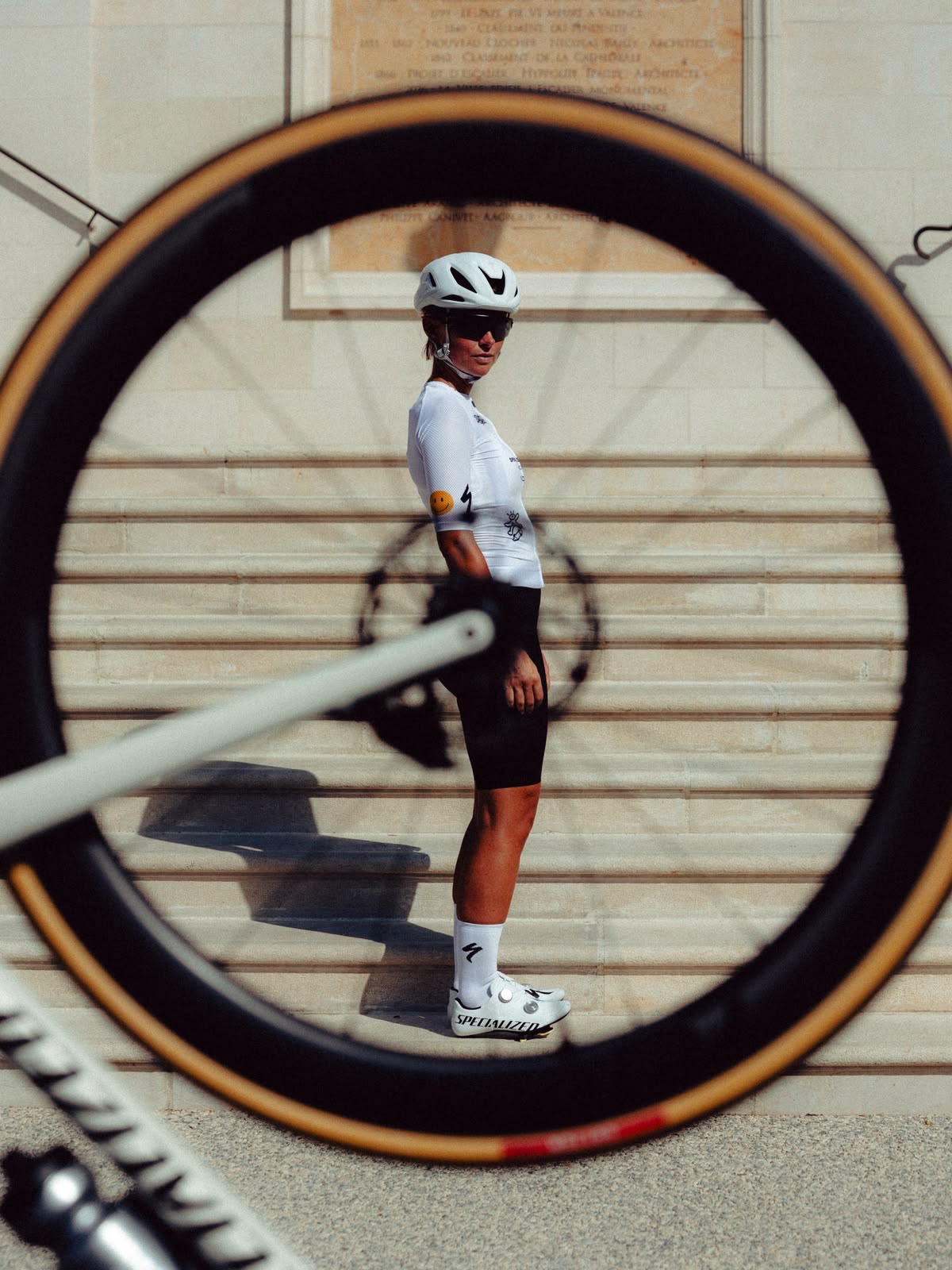
Two cyclists travel the same distance at the same speed. One is sheltered from the wind in a group; the other pedals alone, faces gusts and finishes with much greater effort. The number on the app is similar. The task was not.
This example shows why evaluating cycling just by kilometers and average speed may be insufficient. Wind, slope, surface, position, equipment and group organization influence the result. Training needs to distinguish what the athlete produces from what the environment allows.
High performance on the bike is not just about raising a number in a test. It's organizing capabilities to sustain the desired task: a climb, a long race, a final sprint, a trip lasting several days or simply a more comfortable ride.
Speed is a result, not a complete description of effort
Speed has practical importance: the test or route takes place in space and time. However, it does not isolate the athlete's work.
On days with very different conditions, chasing the same average can turn an easy session into a tough workout. The opposite can also happen: a favorable wind produces a better mark without an equivalent change in physical capacity.
A more useful comparison combines the external task with perceived exertion and, when available, power and heart rate. Each variable answers a different question; none alone describes the entire context.
The literature on RPE shows its use in continuous sports control, but also highlights differences in application. A consistent scale helps you compare perceived cost without treating it as a perfect measurement.[1]
Power helps, but does not eliminate the need for interpretation
A power meter records a mechanical variable useful for describing the work on the bike. Still, calibration, equipment and measurement location can influence the result.
The target power of a session does not prove that it was performed. A prescribed value in the application and an actually measured value need to remain separate. Without a sensor, it is not suitable to transform speed into precise individual watts without a model and its limitations.
Even when power is reliable, internal cost can change. The same task may seem more difficult in hot conditions, after another demanding session, or with inadequate recovery.
Therefore, power and perception are not rivals. The whole can show that an athlete sustained the planned work, but at a cost much higher than expected. This information can influence the next decision.
FTP is not the whole athlete
Functional threshold power, or FTP, is used to organize zones and track training. Its value depends on the estimation or testing protocol adopted and should not be automatically interpreted as a power that anyone will sustain for exactly sixty minutes.
It is also not a perfect synonym for critical power or all physiological definitions of threshold. Mixing methods and calling them all by the same name can generate inconsistent prescriptions.
Even a well-executed test leaves capabilities undescribed: sprint power, performance after several hours, technique, heat tolerance and dietary strategy, for example.
The practical proposal is to use the test as a reference, not as an identity. Define the method, maintain comparable conditions, and verify that the resulting zones produce coherent sessions. A change in protocol should be recorded, rather than appearing as automatic physiological evolution.
Durability: what is left after the accumulated work?
An athlete can perform excellently at the beginning of a ride and lose a lot of capacity after prolonged exposure. Another may have a slightly lower initial result, but maintain what they can produce better.
Durability is a useful way to discuss this resistance to deterioration with accumulated work. The concept of physiological resilience has been explored in the endurance literature, including its definition and training possibilities.[2]
For the practitioner, the question is concrete: can I perform the important task when it actually appears? A decisive climb after hours is not the same as the same climb carried out while rested.
This doesn't mean that every workout should end in exhaustion. The exhibition needs to be built and monitored. Training durability is not simply about cycling for as long as possible without food.
How to observe durability without creating a dangerous test
A practical proposal is to compare standardized excerpts at different times of a session that is already part of the routine. Conditions, previous intensity, nutrition and duration must be considered.
If the last stretch becomes more difficult, the information may reflect fatigue, heat, pacing strategy or insufficient intake. There is no single guaranteed explanation.
The goal is not to reproduce a laboratory protocol without supervision. It’s about observing patterns in habitual training and constructing better questions. The session needs to end safely, especially when there is traffic, descents and navigation.
Avoid using an isolated fall as a diagnosis of “lack of base”. A set of comparable sessions says more than a ride in exceptional conditions.
Strength can improve cycling without increasing VO₂max
A systematic review with meta-analysis, published online in 2025 and in a 2026 edition, analyzed heavy strength training combined with cycling. It brought together seventeen studies and 262 participants. It found benefits in cycling efficiency, anaerobic power and grouped performance results, without significant improvement in all physiological determinants analyzed. The certainty of the evidence was classified as low.[3]
This does not promise a specific reduction in testing time. It shows that a strength program can offer benefits that don't just appear in VO₂max.
The application needs to respect experience and calendar. A beginner should not start with heavy loads just because studies have investigated heavy training. Learning, progression and volume distribution matter.
Bodybuilding must support the bike. If it leaves the athlete unable to continuously perform the priority sessions, the dose deserves review. “Good exercise” does not automatically mean “good combination”.
Cadence does not replace the task description
Pedaling at a heavy pace may seem like bodybuilding, but low cadence alone does not describe intensity or guarantee the same stimulus as a strength program.
To understand the session, record resistance or power, duration, recovery and position. A short sequence with high resistance and a full hour at a low cadence are different tasks.
The same goes for high cadence. Spinning faster does not necessarily mean producing more power or performing the session better. The choice depends on the objective and the ability to sustain the task with control.
Avoid turning a single cadence into a rule for all terrain and athletes. The question is what that adjustment intends to develop and how its response will be observed.
Easy days need a function
A comfortable ride can accumulate activity, allow practice and make up the week without the same demands of intense sessions. But this is lost when each output includes a dispute over average or segment.
The consensus on optimizing elite performance highlights specificity, individualization and adaptation of strategies to demand. Applied to cycling, it means knowing whether the goal for the day is comfortable volume, intensity, skill or another quality.[4]
There is no obligation to adopt a rigid intensity distribution for anyone. Available time, experience and other modalities modify the program.
A routine of a few hours is not an exact proportionate version of professional preparation. She needs to select priorities, rather than trying to cram all the stimuli into each session.
Food is part of the execution
On a prolonged ride, the intake strategy can influence the ability to sustain work. Waiting for a sharp drop in energy to start thinking about food is not a good way to test a plan.
Sports nutrition recommendations emphasize adapting energy, carbohydrates, proteins and liquids to demands and the interval between sessions. The concrete need depends on the duration, intensity, environment, tolerance and goals of the person.[5]
It is not necessary to use sports products on any short outings. It is also not appropriate to treat the absence of food in long sessions as proof of mental superiority.
Practicing a strategy in training, when appropriate, helps you learn tolerance. Debuting food or equipment during an important race adds avoidable uncertainty.
An example of a week with priorities
The table below is illustrative for a healthy practitioner, already trained and willing to combine cycling and strength. It is not a universal prescription.
| Window | Possible goal |
|---|---|
| First session | Comfortable ride, with controlled effort |
| Second session | Strength with volume compatible with cycling |
| Third session | Intervals or work specific to the current goal |
| Fourth session | Rest, light or technical activity |
| weekend | Longer ride, with planned pace and fueling |
The number of sessions can be smaller or larger. The first decision is what matters most during the period. An athlete preparing for a short event may organize the program differently than someone who needs to tolerate long hours.
Do not automatically increase long ride duration, interval intensity, and weight training volume at the same time. Tracking changes makes it easier to interpret the response.
Indoor and outdoor are not identical experiences
In the indoor environment, traffic and wind no longer determine speed, but ventilation, equipment and configurations gain importance. The same value displayed on different bikes may not be directly comparable.
Register equipment and maintain similar conditions when the goal is to follow a trend. A “level eight” resistance is not a universal unit of work.
Without a reliable meter, time, setup, available cadence, and perceived effort can provide useful tracking. It is better to honestly describe the task than to invent precision that the equipment does not provide.
On the street, safety and traffic rules take precedence over taking a break at any cost. The session should be adapted to the location, not the other way around.
What to follow beyond the average
A simple set might include total time, main task, power when actually measured, perceived effort, and relevant conditions. For long goals, also look at performance maintenance and what happened with nutrition and recovery.
An isolated sprint, a threshold test and an extended ride answer different questions. It is not necessary to evaluate everything every week, but the history should not be reduced to a single number.
If performance improves while effort remains manageable, the dose may be working. If the cost goes up and the quality drops repeatedly, it's worth reviewing the set before adding more intensity.
THE VETOR and the cyclist’s context
VETOR's proposal is to relate objective, frequency, history and response. A bike workout should not be interpreted in isolation when the user also runs, trains legs or practices another sport.
The system needs to distinguish measured data from estimates and recognize when information does not exist. A power target is not a power reading; a calorie estimate does not describe all fatigue.
Depending on available resources, monitoring can help organize priorities: develop one capacity, maintain another and adjust the rest of the week. No algorithm eliminates the need for context or turns a test into a complete description of the athlete.
Conclusion
Better cycling involves more than increasing your average speed. The program needs to consider work output, perceived cost, ability to sustain performance, strength, and strategy for extended sessions.
The literature on strength and concepts of physiological resilience expands this reading, while consensus reminds that individualization and nutrition are part of preparation.[2][3][4][5]
The question is no longer just “how fast did I pedal?”. It becomes “what work was I able to sustain, under what conditions and at what cost?”.
VETOR — DON’T GUESS.
The same speed can have different costs. VETOR seeks to connect context, prescription and history so that training is interpreted beyond the most visible number.
Train to produce. Train to sustain. And learn to distinguish a fast ride from a well-directed workout.
Your goal deserves a plan.
Discover VETOR's proposal to organize training according to your routine and monitor progress.
References
- Torres G, Maia F, Nakamura FY, Neiva HP, Sousa A. Rating of perceived exertion in continuous sports: a scoping review with evidence gap map. Frontiers in Sports and Active Living. 2025;7:1553998DOI: 10.3389/fspor.2025.1553998
- Jones AM, Kirby BS. Physiological Resilience: What Is It and How Might It Be Trained? Scandinavian Journal of Medicine & Science in Sports. 2025;35(3):e70032DOI: 10.1111/sms.70032
- Llanos-Lagos C, Ramirez-Campillo R, Sáez de Villarreal E. Heavy strength training effects on physiological determinants of endurance cyclist performance: a systematic review with meta-analysis. European Journal of Applied Physiology. 2026;126:193–222; online publication in 2025DOI: 10.1007/s00421-025-05883-2
- Bangsbo J, Hostrup M, Hellsten Y, et al. Consensus Statements—Optimizing Performance of the Elite Athlete. Scandinavian Journal of Medicine & Science in Sports. 2025;35(8):e70112DOI: 10.1111/sms.70112
- Thomas DT, Erdman KA, Burke LM. Nutrition and Athletic Performance. Medicine & Science in Sports & Exercise. 2016;48(3):543–568DOI: 10.1249/MSS.0000000000000852
Educational content. Examples do not replace individual assessment and guidance from training and healthcare professionals.